Haiger’s draft 2027 budget: deficit, investment and borrowing explained
Haiger’s draft municipal budget for 2027 projects higher expenditure, substantial infrastructure investment and increased borrowing. Here are the key figures and what they mean.
What is planned for 2027?
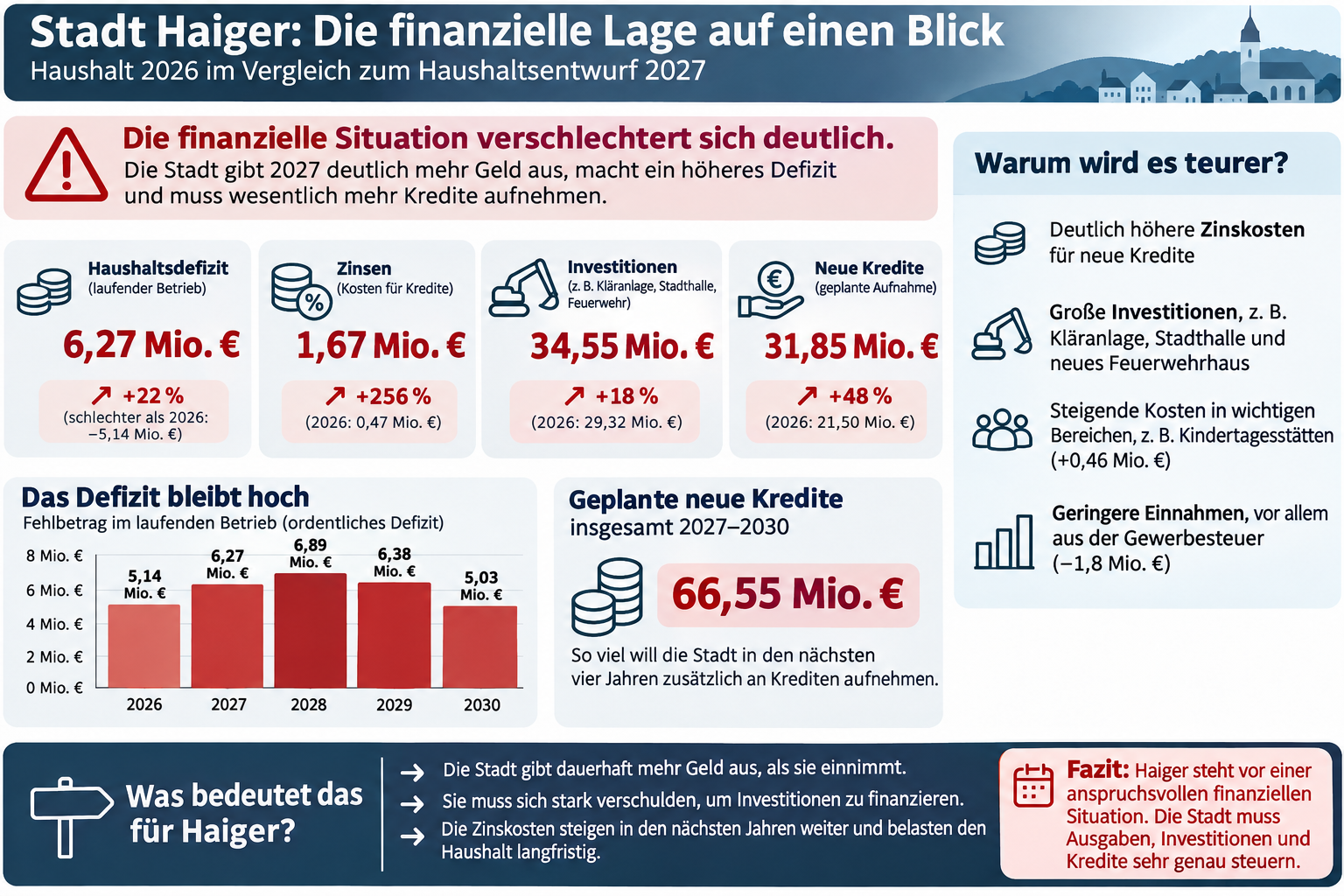
Ordinary revenue of approximately €64.19 million compares with ordinary expenditure of approximately €70.46 million. This leaves an ordinary deficit of about €6.27 million. Including extraordinary income, the projected annual deficit is about €5.19 million. The comparable 2026 budget figures were €5.14 million and €3.66 million respectively.
Which costs are increasing?
Interest and other finance expenses are budgeted to rise from €468,000 in 2026 to €1.67 million in 2027. Depreciation rises from €3.31 million to €3.99 million, and personnel expenses are projected at €18.05 million, compared with €17.80 million in 2026. Expected trade-tax revenue falls from €30.8 million to €29.0 million.
What investments are planned?
Capital expenditure of approximately €34.55 million is planned for 2027, compared with €29.32 million in the 2026 budget. Major projects include €9.5 million for the town hall refurbishment in 2027, €13.5 million for the Haiger wastewater treatment plant and work on a new fire station. These are annual allocations, not necessarily the total costs of each project.
How will investments be financed?
The city plans new borrowing of €31.85 million in 2027, compared with a 2026 budget figure of €21.5 million. Debt repayments are budgeted at €1.52 million. Cash flow from ongoing administrative activities is expected to be negative at around €2.23 million. Actual borrowing will depend on how projects progress and on available funds.
What does the forecast show through 2030?
The medium-term plan continues to project ordinary deficits of approximately €6.89 million in 2028, €6.38 million in 2029 and €5.03 million in 2030. Interest and other finance expenses are forecast at €2.42 million, €2.97 million and €3.12 million in those years. These projections may change.
What does this mean for residents?
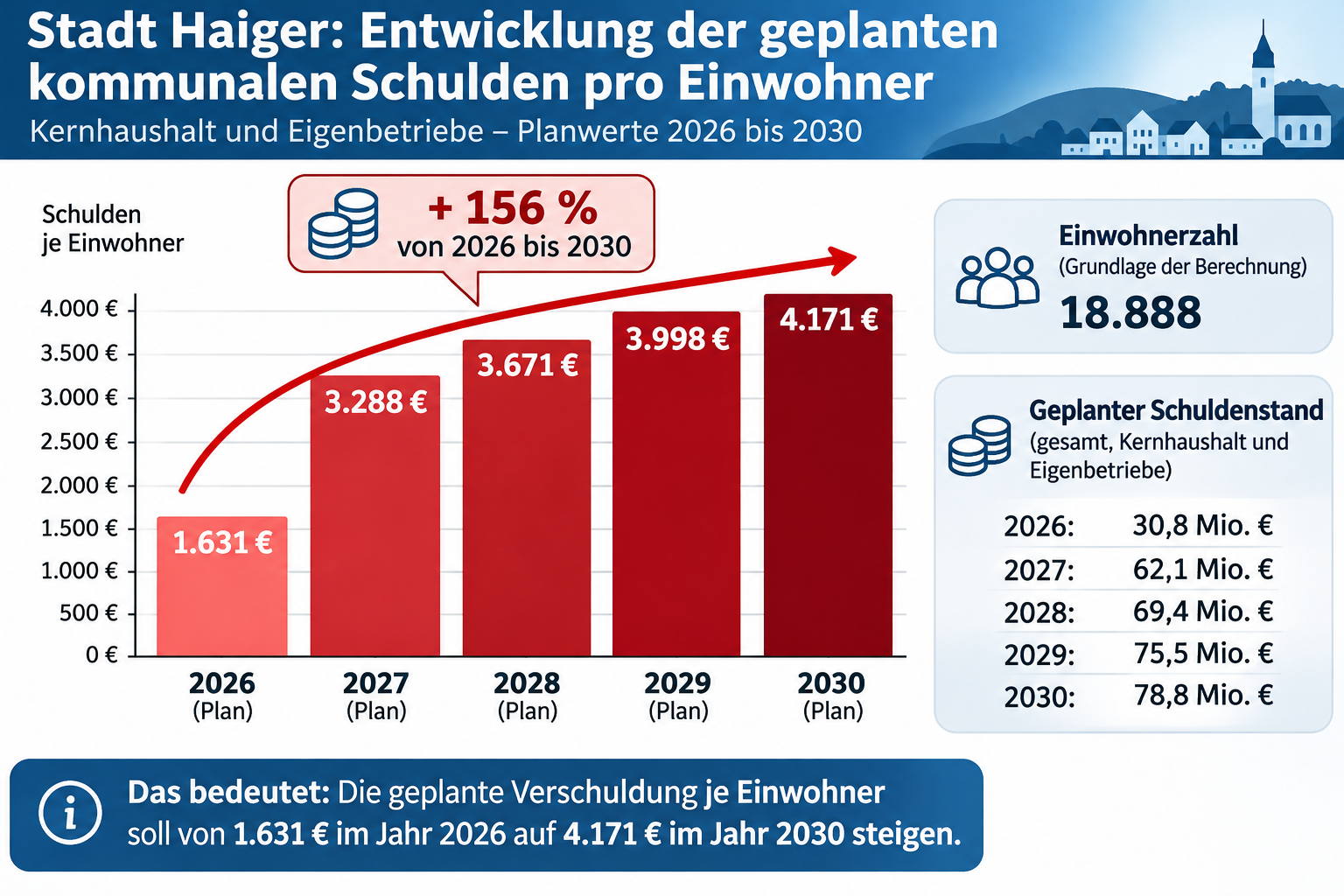
The city needs to finance everyday public services while investing in infrastructure, including wastewater facilities, emergency services and public buildings. At the same time, ordinary expenditure is projected to exceed ordinary revenue. The timing of investments, their ongoing costs and future borrowing and interest payments are therefore central questions for the budget debate.
What happens next?
The 2027 budget is still a draft. The responsible municipal bodies will consider it and any proposed amendments. All figures are budget estimates or forecasts, not final annual results.
Key figures compared
| Indicator | 2026 | 2027 |
|---|---|---|
| Ordinary deficit | €5.14m | €6.27m |
| Annual deficit | €3.66m | €5.19m |
| Capital expenditure | €29.32m | €34.55m |
| Planned new borrowing | €21.50m | €31.85m |
| Interest and finance expenses | €0.47m | €1.67m |